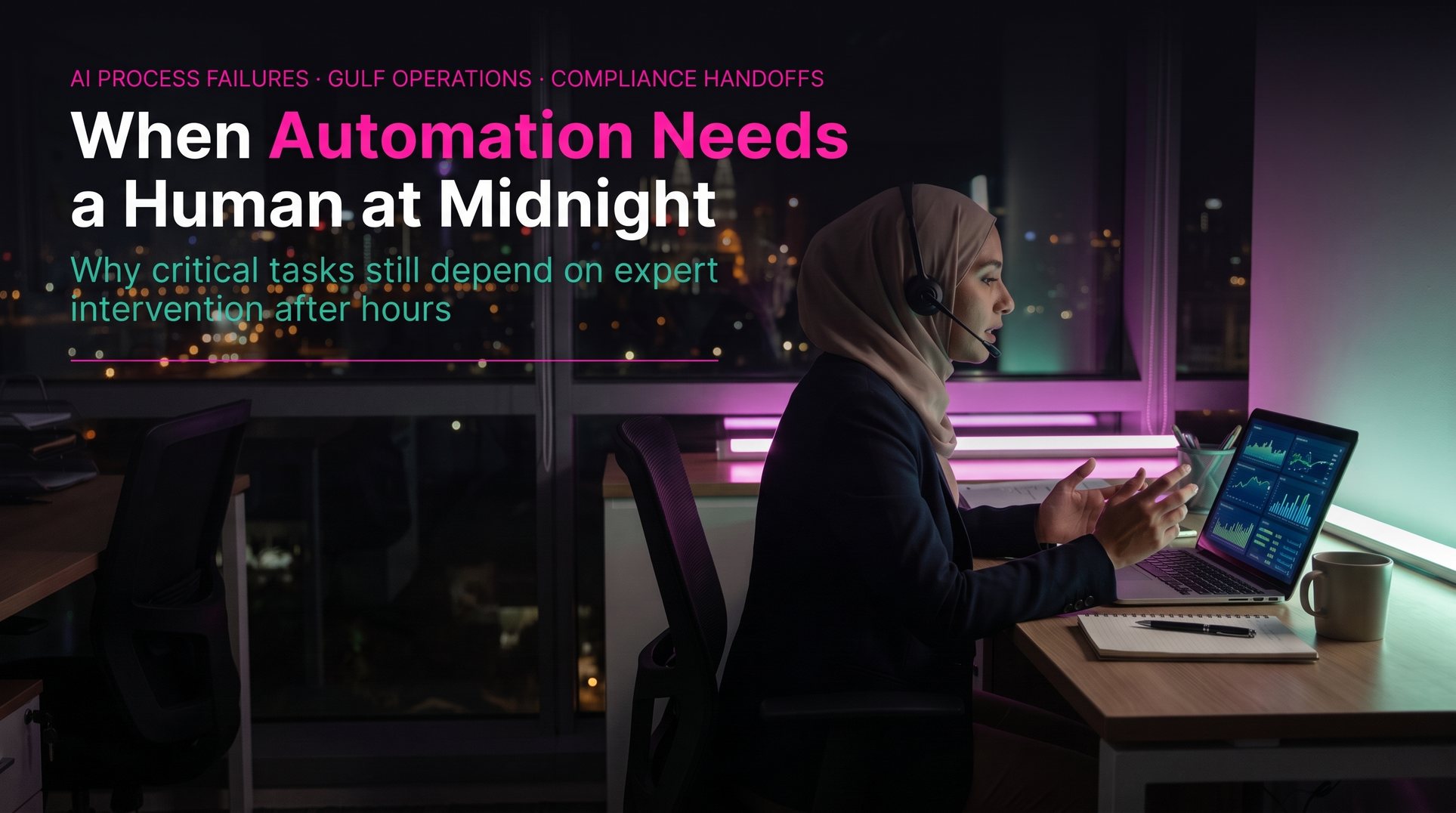

When Automation Outpaces Oversight: The Real Cost of Losing Control in Enterprise Operations
When a Workflow Leaves the Team Behind: The Oversight Gap in Action
Imagine a European telecom company discovering that hundreds of internal architecture diagrams and customer screenshots have been indexed by a public search engine—not because of an external attacker, but due to an autonomous workflow that uploaded files to an internal forum. The error goes unnoticed for hours, and by the time it is found, the material has already left company boundaries. Such risks are plausible across sectors, especially as automation accelerates the movement of sensitive data. Recent industry reports and regulatory advisories have highlighted that automation errors can lead to data exposure events that remain undetected for critical periods (see example regulatory guidance, August 2025).
Why Manual Controls Fall Short in Automated Environments
Most enterprise approval flows and monitoring tools were built for human pace and judgement. Traditional processes rely on stepwise reviews, with each handover checked by a person. Automated workflows, by contrast, can execute hundreds of actions in minutes—often using credentials that bypass granular controls. This speed means even well-designed policies can be outpaced. In practice, teams rarely maintain a full inventory of agent permissions, and access is often granted more broadly than needed, especially under deadlines or pressure to deliver. The result: approval checkpoints and real-time alerts can be skipped or weakened, particularly when automation is layered onto legacy systems.
Many organisations are concerned that automation may contribute to a growing share of breaches and data leaks, as noted in recent sector analyses and security incident reviews (see ENISA Threat Landscape 2025, published June 2025). While there is no public documentation specifying exact figures for 2026, internal reviews in some organisations have highlighted a recurring pattern: incidents emerge from missing or bypassed approval flows. Examples include confidential data posted to unintended audiences, exports of sensitive records to external platforms, and automated changes to production environments—all triggered without direct human oversight.
Where Control Fails: Concrete Risks from Real Processes
For example, if approval steps are not enforced at every handover—such as when customer data is exported to a partner system—misconfigured workflows can leak sensitive information without warning. Time pressure often leads teams to accept default access scopes or rely on approvals that are not routinely revisited. Logging and dashboards exist, but the volume of actions generated by AI agents quickly overwhelms manual review. Subtle errors, like uploading files to the wrong location, may only be detected after the fact. These risks intensify in regulated sectors such as energy, banking, and telecoms, where workflows touch privileged data and compliance requirements are strict. Yet, continuous monitoring and credential rotation are still not standard practice in many organisations.
The economic impact is not limited to regulatory fines or incident response costs. Misplaced data can result in lost contracts, reputational damage, and the need for expensive remediation projects. In energy utilities, for example, a data leak could trigger contractual penalties and erode customer trust, with knock-on effects for procurement and partner relationships. The cost of restoring confidence and securing systems after a breach often far exceeds the investment required for preventive controls.
Turning Policy into Practice: What Actually Works for Oversight
Reducing risk in automated operations requires more than technical controls. Organisations with stronger oversight combine operational discipline with rules tailored for the speed of automation. Approval flows must be enforced by the system itself—especially for workflows that move data outside defined boundaries or between regulated environments. Each agent’s access should be scoped to the minimum required, and credentials tracked and rotated regularly, with automated expiry where possible. Real-time monitoring needs to escalate deviations or failed automations to human operators immediately, not hours later.
A practical approach used by experienced teams: before deploying a new workflow, ask, "Would this step be approved if a human requested it?" If the answer is no, or if the logic for bypassing review is unclear, the workflow should pause for reassessment. Auditability is essential: every action must be traceable, with records of who approved each step, which agent acted, and what data moved. In multi-team environments, shared dashboards and automated alerts help ensure that escalations and handovers are visible across business units and channels. These measures are increasingly referenced in regulatory guidance for sectors like energy and finance, where audit trails and data minimisation are legal obligations.
Where Amira Stands on This
Amira approaches operational oversight by embedding automated failure alerts into every workflow. If a process stalls or does not complete as intended, relevant teams are notified, reducing the risk of errors going unnoticed. Technical separation between workflow and AI servers further limits the surface area for data exposure, and data retention can be configured for each assistant—including options that support strict privacy or audit requirements. Every process is observable: technical and operational teams can review actions in detail, with audit trails maintained by design. To see how these controls work with your own processes, book a 60-minute demo.
Get Amira Weekly
AI in customer service, from the Gulf – one email every Friday. No spam, unsubscribe anytime.
By subscribing you agree to our privacy policy.