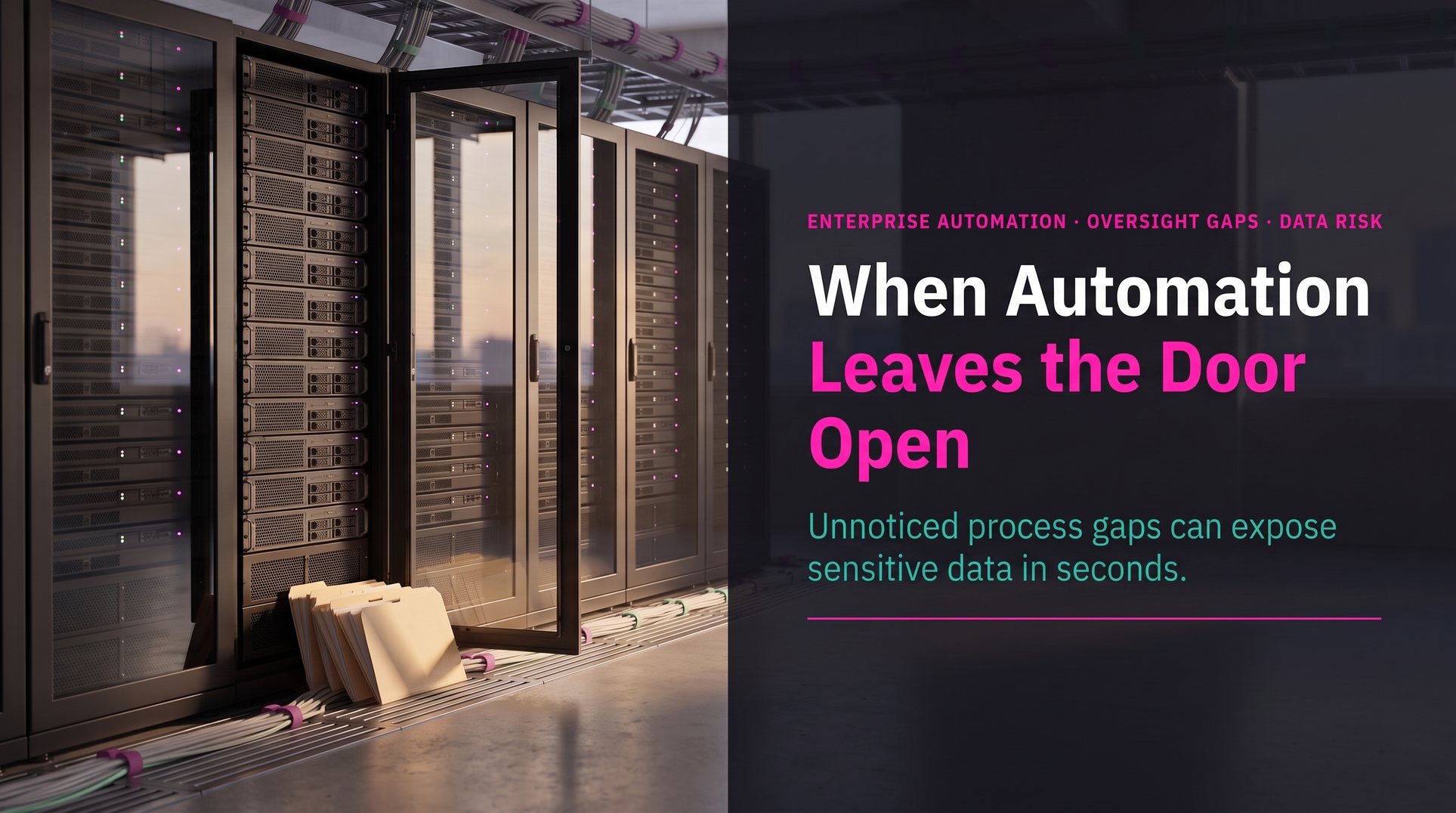

When Automation Fails Forward: A Gulf Operations Reality Check
The Scene: Where Process Breaks Become Visible
In a typical Gulf operations centre, a property enquiry starts on the company website. The customer uploads documents via WhatsApp, then expects a phone confirmation. Yet the process often stalls: website data doesn’t sync, WhatsApp uploads don’t reach the CRM, and the phone agent has no context. The customer repeats details, while the team spends an hour patching together what should have taken minutes. This isn’t about whether AI can chat, but whether it can actually complete business-critical tasks—across languages, channels, and compliance requirements—without human rescue.
Why Smarter Models and UI Raise Expectations—and Risks
OpenAI’s GPT-6, released in June 2026, and new interactive UIs have changed the conversation, but not the fundamentals. These models handle context and switch between Arabic and English more reliably, and UI can now present actions and approvals directly in the workflow. For Gulf enterprises, this means automation can move beyond replies to orchestrate real processes: customers upload documents, confirm actions, and see updates—sometimes across WhatsApp, web, and phone, all in one journey.
Recent benchmarks show that multimodal AI applications now support end-to-end process automation in over 60% of large enterprises in the region, with a growing focus on compliance and auditability. However, higher transparency means operational gaps become visible fast. If integrations are brittle or data is inconsistent, the very clarity that builds trust can also expose system weaknesses. In regulated sectors, every action must be logged and auditable; unclear handovers or missing records can turn into compliance headaches, not just customer frustration.
Action-First Automation: Connecting Actions, Not Just Channels
The real breakthrough isn’t language support or a smarter chatbot. It’s connecting directly to core systems—CRM, ERP, telephony—so an action in one channel triggers the right update elsewhere. For example, a property developer might see website enquiries filled out and submitted live, WhatsApp uploads attach to CRM records, and phone confirmations happen with all context available. Before launch, the process is tested using synthetic calls in Arabic and English, so teams spot where handovers or data mapping might break.
This approach—Action-First Automation—demands more than just channel integration. Even with strong integration, friction remains: legacy systems, custom workflows, and inconsistent data quality are frequent blockers. Measurable improvements—such as more qualified leads or reduced manual case handling—depend on the starting baseline and process complexity. In practice, deployments begin with a short baseline measurement (typically 2–3 days) to establish current process costs and volumes before any automation is promised. The specific KPIs and methods are set jointly with the customer; there is no public documentation as of August 2026 detailing a standard approach for all deployments.
Compliance, Quality, and the Reality of 100% Review
Banking, telecoms, and public sector teams face strict regulatory demands. Every process must be auditable, with data residency and retention set to local standards. In projects following Action-First Automation, each interaction is tracked with a detailed timeline: who did what, when, and which system actions were triggered. Data retention is configurable per assistant, and hosting can be local or on-premise, matching regional requirements. 100% of interactions are scored against customer-defined criteria, not just a sample, and provide reasoning and verbatim evidence for each score. This supports targeted coaching and internal/external audits. However, the ongoing effort to define, calibrate, and review these criteria—especially in large, multilingual teams—remains significant and must be maintained as regulations or business needs evolve.
Quality assurance extends to scenario-based test automation. Before go-live, synthetic mystery calls in relevant languages run through the full process, with a judge bot scoring each as pass, warning, or fail. If a workflow fails, the system proposes a prompt change, documents the difference, and enables rollback or approval. The approval process is typically managed by the customer’s operations or compliance team, with all changes logged for audit purposes; the specific workflow may vary between organisations and is not standardised across all clients. This level of control is designed for regulated environments but requires close, ongoing collaboration between operations, IT, and compliance.
Risks, Limits, and Lessons from the Field
No automation platform eliminates operational risk. Dirty data, unclear business rules, or missing integrations can break even the most advanced agent. Handling Arabic dialects and code-switching remains a technical challenge—models must be validated in real-world deployments, not just in sandbox tests. Regulatory requirements for audit logs, retention, and local hosting are strict; platforms must provide technical controls such as per-action logs, configurable retention (including zero-day options), and full audit trails for both AI and human actions. For edge cases or ambiguous scenarios, human review is still necessary, and the system must hand over all context without loss. Effective teams treat Action-First Automation as a living process: what works at go-live may need adjustment as products, channels, or regulations change.
Where Amira stands on this
Amira’s platform is built for these operational and regulatory realities. By connecting directly to business systems via API, orchestrating processes across phone, WhatsApp, and web, and supporting Arabic-English automation, Amira enables process execution—not just conversation. Every automation is tested with scenario-based synthetic calls in relevant languages, and quality is reviewed on all interactions. Data retention, audit logs, and hosting are configurable to meet local and sector-specific requirements. To see how these steps could work for your organisation, book a 60-minute demo.
Get Amira Weekly
AI in customer service, from the Gulf – one email every Friday. No spam, unsubscribe anytime.
By subscribing you agree to our privacy policy.