
Unified Agent Automation: What Meta’s Enterprise AI Platform Means for Customer Service Leaders
WhatsApp Campaigns Without Channel Silos
The marketing team of a telecom provider prepares to launch an outbound WhatsApp campaign for a new data plan. In the past, this meant separate workflows for WhatsApp, web, and phone—each with its own bot logic, integration challenges, and coordination overhead. Even minor changes could drag on for weeks, risking inconsistent CRM data and an uneven customer experience.
According to anecdotal reports, some teams using Meta’s enterprise AI platform now coordinate campaigns through a single interface. Agent handoff and follow-up actions are embedded in one flow, and for organisations with well-documented APIs and standardised systems, setup can be swift. However, the actual project duration depends heavily on internal IT maturity and process clarity. There is no public documentation of typical deployment times as of August 2026; any claims of "deployment in hours" should be viewed as best-case scenarios for highly prepared environments.
From Fragmented Bots to Orchestrated Journeys
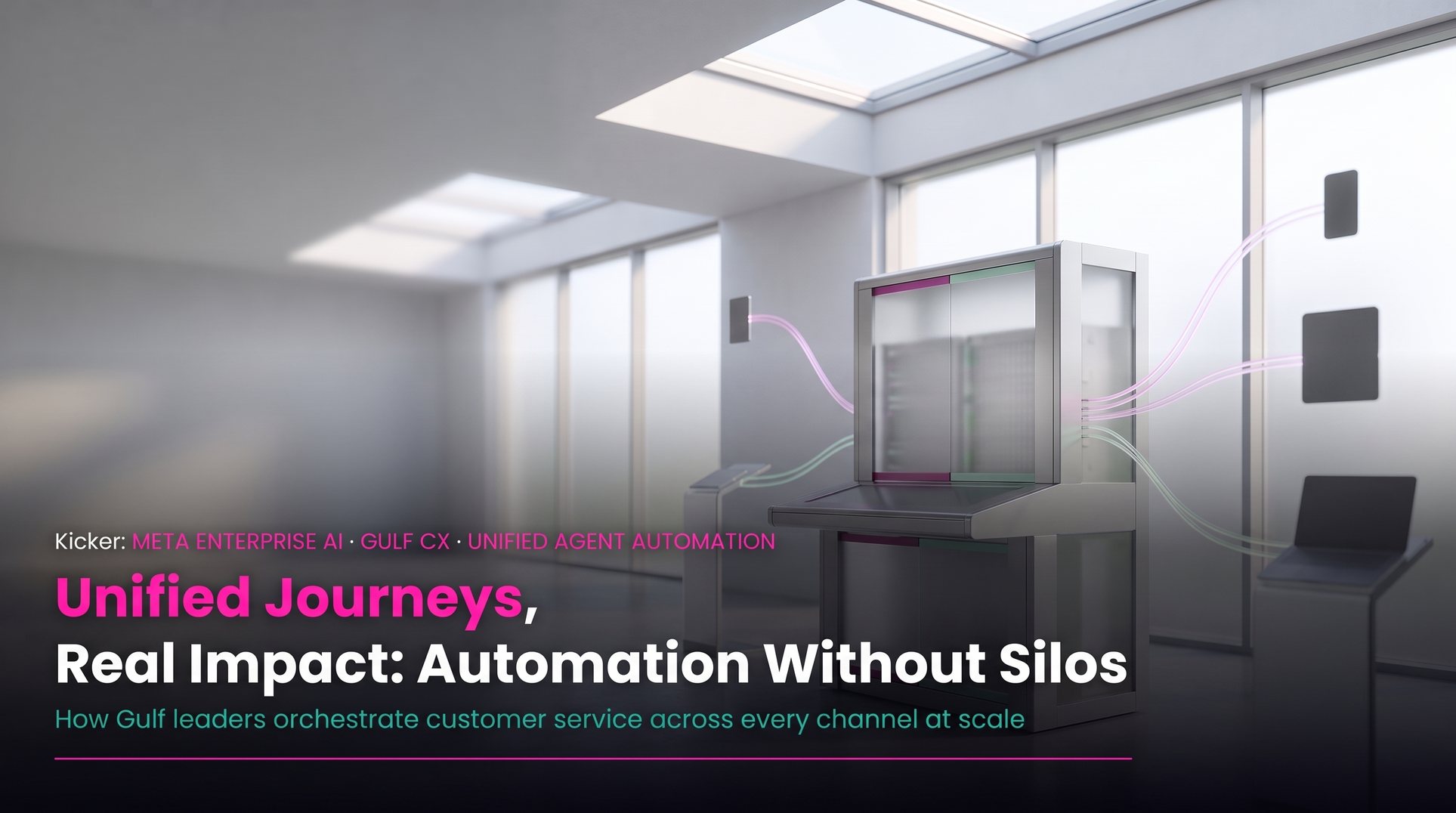
Meta’s enterprise AI platform enables AI agents, workflow automation, and integration across WhatsApp Business, Messenger, Instagram, and core business systems to enable smooth customer journeys. Instead of building and maintaining separate bots for each channel, companies can design end-to-end workflows that carry customer context across touchpoints. For example, a customer might start on WhatsApp, move to the website, and escalate to a call—without repeating information, while business records update live.
This approach brings efficiency gains for enterprises with API-ready infrastructure. Zero-code setup and reusable workflow components can lower technical overhead. In practice, though, companies with custom or legacy systems often face additional integration work. Middleware or bespoke connectors may be needed, extending timelines and increasing costs. For regulated sectors, integration details—such as data residency, retention, and auditability—require close scrutiny, as there is currently little publicly available evidence on how Meta’s platform meets sector-specific compliance requirements.
Unified Agent Automation: What’s Gained, What’s at Stake
Coordinating AI agents across channels under one operational layer promises process continuity: customers aren’t asked to repeat themselves, and companies can follow the entire journey, not just isolated touchpoints. While the scale of benefit is widely discussed, there is no published benchmark quantifying ROI or cost reduction as of August 2026. What is clear is that process handoffs and context loss have historically driven up operational costs and customer frustration.
However, unified automation brings new considerations:
- Integration depth: Hundreds of connectors exist, but legacy or non-standard systems—common in banks and government agencies—often require custom work. Out-of-the-box solutions rarely suffice for these cases.
- Deployment speed: Some teams have achieved rapid setup for specific workflows, but complex, cross-system journeys typically require more time. Leaders should insist on a baseline measurement to map actual process complexity and integration needs before accepting fast deployment promises.
- Vendor dependency: Centralising automation on one platform increases efficiency but also dependency. As of August 2026, there are few publicly documented cases of large-scale migrations away from Meta’s platform. Companies should clarify data export capabilities, supported formats, and exit procedures in advance, and where possible, run test exports before committing.
- Governance and control: The risk of agent sprawl—multiple bots operating without coordination—remains. Effective platforms should offer monitoring, configurable workflow alerts, and audit trails. For regulated organisations, being able to inspect, test, and roll back automations is critical, but practical implementation details remain sparsely documented.
Table: Fragmented Chatbots vs Unified Agent Automation
| Criteria | Fragmented Chatbots | Unified Agent Automation |
|---|---|---|
| Channels | Isolated per channel | Orchestrated across channels |
| Context transfer | Often lost | Retained, no repetition |
| Integration | Manual, per bot | API-based, centrally managed |
| Setup effort | High, per bot | Lower with API-ready systems |
| Vendor lock-in | Medium to high | Platform-dependent |
| Monitoring/optimisation | Per channel | Centralised, near real time (depending on system integration) |
While the table highlights conceptual differences, real-world implementation depends on the readiness of existing systems. In companies with deeply embedded legacy infrastructure, even centralised platforms may require significant effort to achieve full orchestration.
Operational Implications: Risks and Open Questions
Integration with legacy systems: Success depends on robust connections to CRMs, ERPs, and telephony. Many organisations still run bespoke or legacy systems where modern APIs are absent. Custom integration or middleware is often necessary, adding time and cost. For regulated sectors, due diligence should include a review of data retention, audit, and rollback capabilities—practical, tested examples remain rare in the public domain.
Vendor dependency: The more business processes are automated through a single platform, the greater the risk of dependency. As of August 2026, there is limited public experience with major migrations off Meta’s platform. Companies should insist on clear data export functionality, documented exit procedures, and regular tests of these capabilities—not just contractual assurances. For sensitive environments, on-premise deployment or BYOK models may be available, enabling greater control over data and compliance. Prospective users should request technical documentation and proof-of-concept demonstrations.
Quality and process control: For quality managers, operational transparency must translate into concrete mechanisms: audit trails, real-time monitoring, and traceable decision logic. Platforms should provide access to detailed logs, workflow histories, and independent testing tools, including human-in-the-loop review and rollback options. There is little public documentation on how these features work in practice, especially in multilingual or sector-specific compliance contexts.
A Decision Checklist for Operations and IT Leaders
Before adopting unified agent automation, operational and IT leaders should clarify:
- What is the actual integration effort for our key use cases, including legacy systems?
- How are data transfer, retention, and export handled in practice—can we run a test export before go-live?
- Is there a documented process for onboarding, baseline measurement, and ongoing quality assurance?
- What controls exist to prevent agent sprawl and ensure process visibility?
- How quickly can workflows be adapted to regulatory or business changes, and how is this tested?
- For regulated sectors: does the platform support on-premise or BYOK models, and what audit features are available?
Decisions should be based on documented evidence and, where possible, real test runs—not vendor assurances alone.
Where Amira Stands on This
Amira enables enterprises to automate entire customer journeys across WhatsApp, telephony, web, and more—connecting directly to existing systems via API, without replacing core infrastructure. Each project begins with a two- to three-day measurement of current process costs and integration complexity, grounding every automation proposal in the customer’s real data. The platform provides per-journey audit trails, full interaction scoring, and configurable data retention, including options for "never stored". For sensitive environments, BYOK, on-premise deployment, and separated workflow/AI servers are available. If you want to see how this works in your own environment, book a 60-minute demo.
Get Amira Weekly
AI in customer service, from the Gulf – one email every Friday. No spam, unsubscribe anytime.
By subscribing you agree to our privacy policy.