
Arabic Dialect Fit in Gulf Customer Service: What Enterprises Can Measure—and What Remains Unsolved
The Real Test: When a Gulf Service Case Crosses Channels
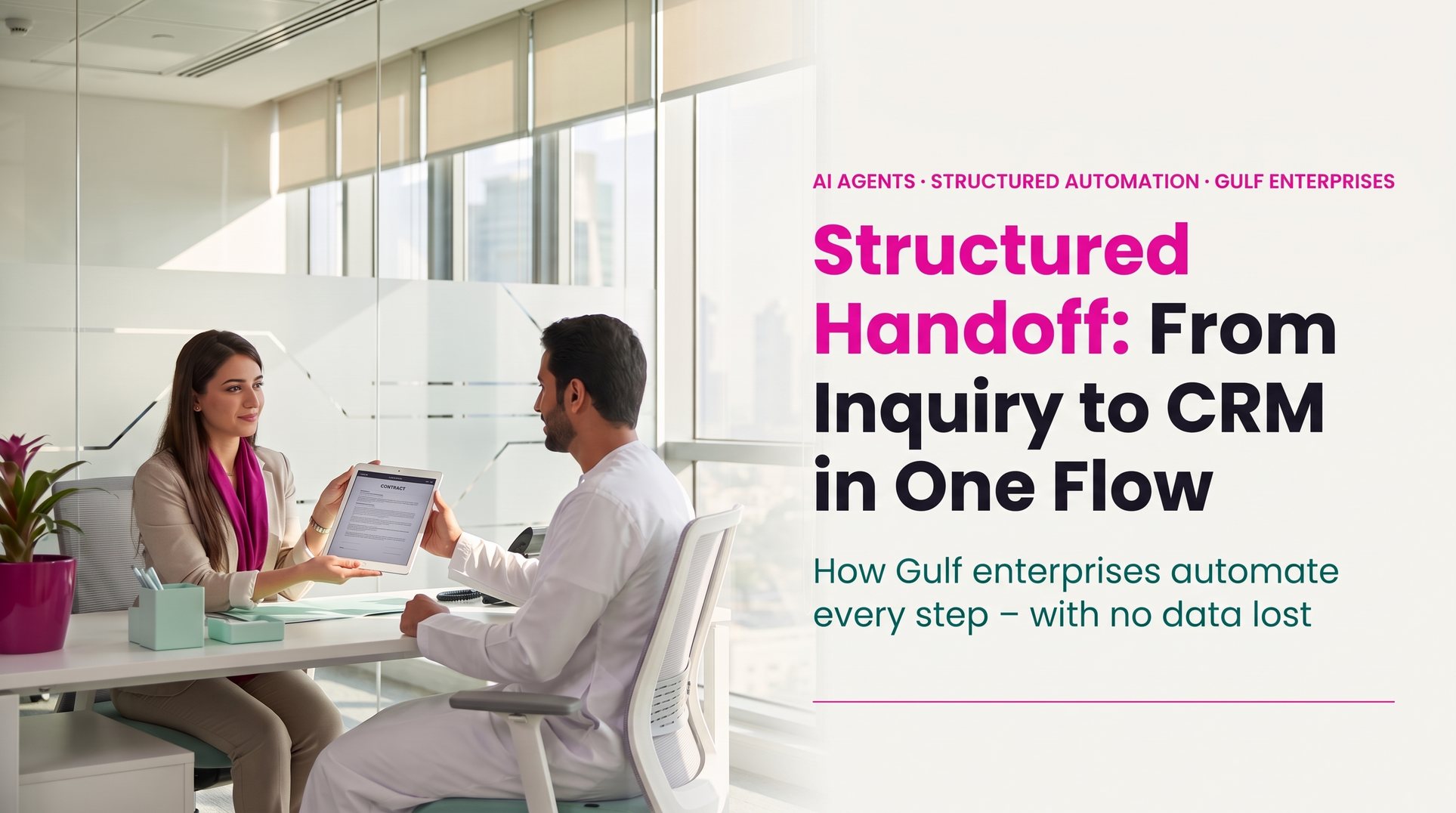
A customer begins a WhatsApp conversation in Emirati Arabic with a telecom provider late at night. The next morning, the same case continues by phone, now blending Arabic and English. The expectation is clear: no need to repeat details, no context lost, and the resolution documented in the CRM without manual intervention. For many Gulf enterprises, this scenario is a daily reality. Yet, as of August 2026, there is no public documentation of any fully automated, audit-ready process that reliably resolves such cross-channel, cross-dialect cases in practice—despite increased investment and vendor claims.
Progress in Arabic Speech AI: Recognition Isn’t the Same as Resolution
Recent technical advances are measurable. Locally trained models now report word error rates around 24.5% for Gulf Arabic, based on tens of thousands of hours of real conversations. This marks substantial progress over prior years. But as industry analysts point out, systems often struggle when customers switch between dialects and English within the same interaction. The industry analysts confirm that while test transcripts can be accurate, live service cases with unscripted dialogue still pose major challenges. In outbound campaigns, as long as conversations follow a script, results are structured. But regional slang, topic changes, or a sudden shift from chat to phone still break most automated processes. To our knowledge, there are no published figures showing how often such cases are resolved end-to-end without human intervention.
Compliance: Audit-Ready Automation Is a Process, Not a Checkbox
Since March 2026, the UAE’s AI Act requires annual third-party audits, quarterly bias tests, and incident reporting for high-risk AI deployments. Regulated sectors must ensure data and inference residency, with some providers responding by deploying local GPU inference. Achieving compliance demands more than technical adaptation: it requires budget for process redesign, detailed documentation, regular audits, and clear approval workflows. For outbound or CRM-driven processes, every automated action—such as a WhatsApp reply or CRM update—must be logged and auditable by humans. The time and effort involved depend on the current system landscape, but several weeks of process mapping and documentation are typically required before an audit can be completed. How this looks in practice: each step, from customer input to final case resolution, needs to be traceable, with audit logs that show both automated decisions and points where human review or override is possible. Without these controls, even technically advanced solutions may fail regulatory checks.
No Public Benchmark: Measuring Your Own Baseline Remains Essential
As of August 2026, there appears to be no public, cross-vendor benchmark for end-to-end process automation in Gulf Arabic across multiple channels. According to Amira’s context, most alternatives focus on single-channel scenarios and may not reliably complete cases across systems or hand-offs. For enterprises, this means self-measurement is essential: track how many cases are currently resolved without manual intervention, account for agent time, error rates, and hand-off gaps, and then pilot automation in real service scenarios. Typical metrics include the percentage of cases resolved end-to-end, cost per completed case, agent occupancy, and the completeness of compliance logs. Setting up such a baseline, including data collection and process mapping, usually takes several days. In practice, moving from 2–5% random sampling to full interaction coverage is only realistic if the platform provides integrated analytics and audit trails—these capabilities should be validated before scaling, especially in regulated environments. Enterprises should expect friction: data silos, inconsistent hand-off protocols, and incomplete CRM records are frequent hurdles.
What Enterprises Should Test: The Dialect Completion Test
To determine whether a platform is ready for Gulf dialect automation, enterprises should:
- Run pilots with genuine customer scenarios, including dialect mixing, code-switching, channel shifts, and ambiguous queries.
- Track not just word accuracy, but whether the process completes in the CRM without repeated steps or manual rework.
- Require local data/inference residency, transparent audit logs, and the ability for humans to review or override outcomes.
- Allocate time for pilot setup and measurement—depending on the complexity of the environment, several weeks may be needed for a full baseline.
- Document every hand-off and compliance-relevant action for audit readiness, including how data is transferred and when human review is triggered.
There is no shortcut here: only a controlled Dialect Completion Test will reveal the true costs, benefits, and compliance risks of automation in Gulf Arabic service cases. Regulatory or sector-specific requirements—such as restrictions on data export or mandated human review—should be addressed from the outset, ideally in coordination with compliance and QA teams.
Where Amira Stands on This
Amira’s platform is designed to automate business processes across existing channels and systems, focusing on end-to-end case completion rather than isolated interactions. Every project begins with a baseline measurement, so enterprises can quantify current process costs and completion rates before scaling. Auditability and human review are built in: all automated actions, hand-offs, and compliance-relevant steps are logged and available for inspection. This approach enables QA and compliance teams to validate automation outcomes directly in the CRM, with human-in-the-loop controls at every critical decision point. If you want to see how this works with your own processes, book a 60-minute demo.
Get Amira Weekly
AI in customer service, from the Gulf – one email every Friday. No spam, unsubscribe anytime.
By subscribing you agree to our privacy policy.