Agentic Automation: What Operational Scale Now Looks Like for Gulf Service Leaders
A Scene from the Shift: When Pilots Become Business as Usual
In late 2024, several large German enterprises reported moving beyond experimental AI pilots. Instead of testing automation in isolated sandboxes, they began orchestrating real processes—handling customer requests across messaging, phone, and CRM systems—in live operations. This shift was not about launching another chatbot. For the first time, frontline teams could see which automations actually closed out cases, which were escalated, and where handoffs failed. For decision-makers in the Gulf, this scene is becoming familiar. Public sector and regulated industries in the region are increasingly deploying agentic automation to handle live workloads, not just as a showcase.
From Experiments to Operational Agentic Automation
AI in customer service once meant pilots: a form, a bot, a single channel. Today, agentic automation is defined by software agents that execute business processes end to end. The agent pulls data from multiple systems, triggers follow-up actions, and completes a transaction or case—without waiting for a human at each step. Gulf-based organisations are already running these deployments in production, especially in sectors like telecoms, tourism, and utilities. For example, a Gulf-based telecom (reference: Golf-Telco, ME) uses agentic automation to manage WhatsApp inquiries, update CRM records, and trigger outbound campaigns in one workflow. The difference is visible: the process starts with a message and ends with a resolved case, not an isolated conversation.
What Business Outcomes Actually Look Like
Benchmarks for agentic automation have shifted from experimental to operational. In Germany, many large enterprises now openly track the ROI of their automation projects. Industry data shows the focus has moved from pilot completion to measurable business impact—reducing costs per case, improving resolution speed, and handling larger interaction volumes without adding staff. Some documented cases in the Gulf report significant reductions in customer service workloads and faster response times, though exact figures vary and should be verified with the respective organisations. Publicly available documentation on large-scale workforce or profit impact remains limited as of mid-2026.
A practical example: a Gulf-based telecom (reference: Golf-Telco, ME) automated outbound messaging in both English and Arabic, with every structured outcome sent directly into the CRM—removing manual data entry and reducing language handover errors. This was not a theoretical pilot, but a live process where the CRM showed resolved cases, escalations, and next steps, all traceable to the automation layer.
Recognising Readiness: What Operational Scale Requires
Not every automation project is ready for operational scale. The difference is visible in four key signals:
- Processes completed, not just interactions handled: The agent must update records, close tickets, or trigger next steps in the business system—across at least two channels.
- Baseline measurement: For example, Amira deployments begin with a 2–3 day baseline measurement of current process costs, resolution times, and error rates. This baseline is used to track improvements and hold automation accountable.
- Outcome observability: Every completed process is logged with a phase-by-phase timeline, including the cost, latency, and any failures. Leaders can inspect each case to see what was automated or escalated, and why.
- Resilience and escalation: When an automation fails—such as a system being unavailable—alerts are triggered, and a human takes over with full context, not starting from scratch.
For example, a Gulf-based utility (reference: anonymized) tracks every customer request from web to phone to CRM, with handovers and escalations logged centrally. This allows quality management teams to audit outcomes, compare pre- and post-automation metrics, and intervene if a process goes off script.
Scaling Risks: Lessons from Germany’s Experience
German studies highlight recurring pitfalls for organisations scaling agentic automation:
- Overestimating readiness: Many projects stall when integration depth or data quality is insufficient for reliable automation. A checklist of required systems, data flows, and human-in-the-loop steps is essential before scaling.
- Weak baseline measurement: Without a clear pre-automation benchmark, ROI claims become speculative. Some German enterprises now run baseline measurements for 2–3 days before rollout, as recommended in Amira's approach.
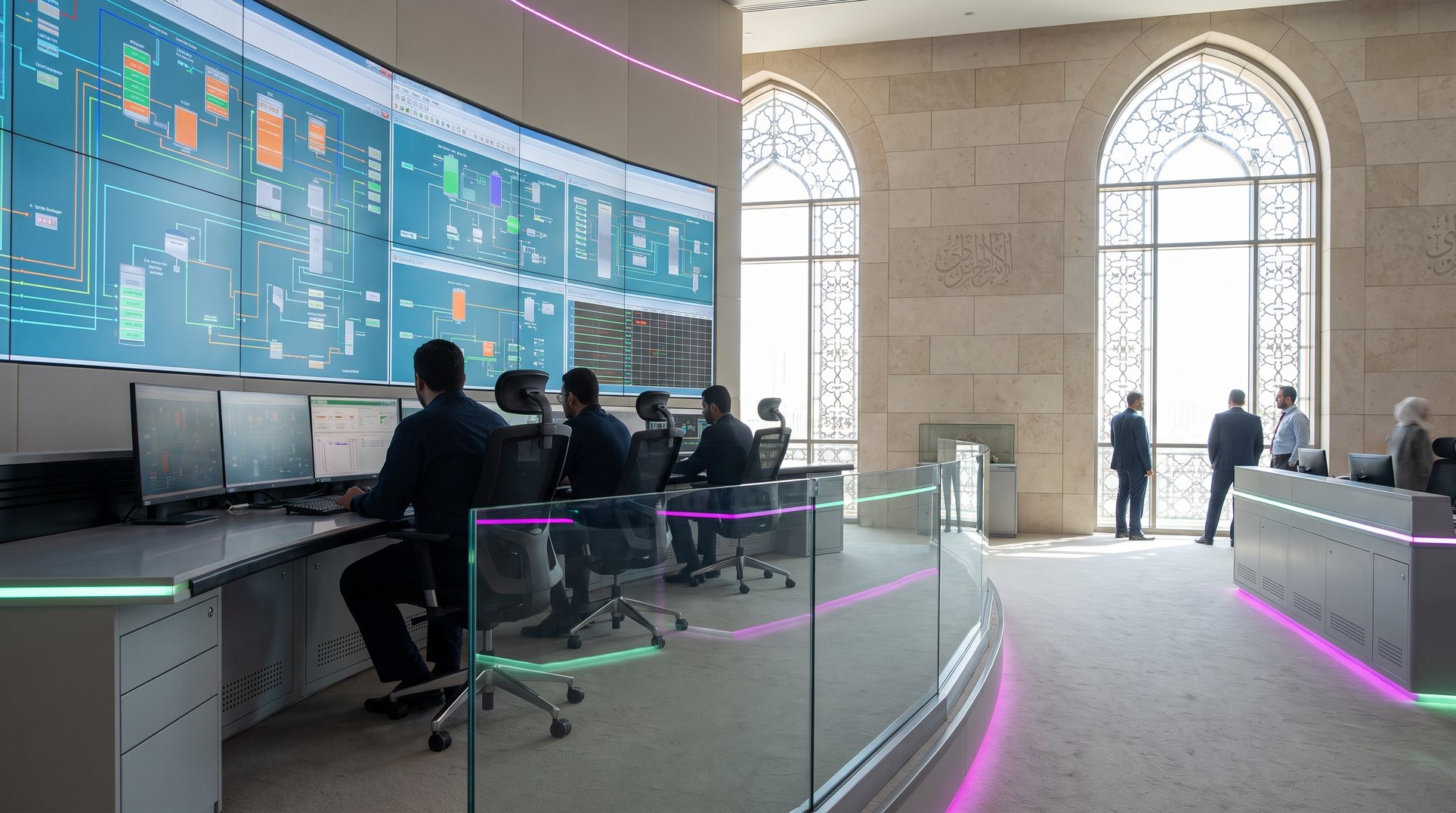
- Lack of operational oversight: Automation should never run as a black box. Quality assurance teams need tools to inspect each process, trigger alerts, and audit outcomes—especially in regulated sectors.
- Exit and rollback plans: Mature deployments always include a defined rollback procedure and the ability to switch off automations cleanly, minimising operational risk.
For Gulf service leaders, these lessons translate into practical steps: define the process to be automated, measure the current state, plan for failure and escalation, and insist on full observability.
Where Amira stands on this
Amira addresses these operational challenges directly. The platform connects to existing systems via API, orchestrates actions across channels, and provides per-case transparency—including phase timelines, cost breakdowns, and audit trails. Every deployment starts with a baseline measurement of process costs and outcomes, so improvements are documented and attributable. When an automation fails, Amira triggers alerts and hands over to a human with a full case summary—no context is lost. This approach is live in sectors including telecoms, real estate, and utilities across the Gulf. To see how this works with your own processes, book a 60-minute demo.
Get Amira Weekly
AI in customer service, from the Gulf – one email every Friday. No spam, unsubscribe anytime.
By subscribing you agree to our privacy policy.